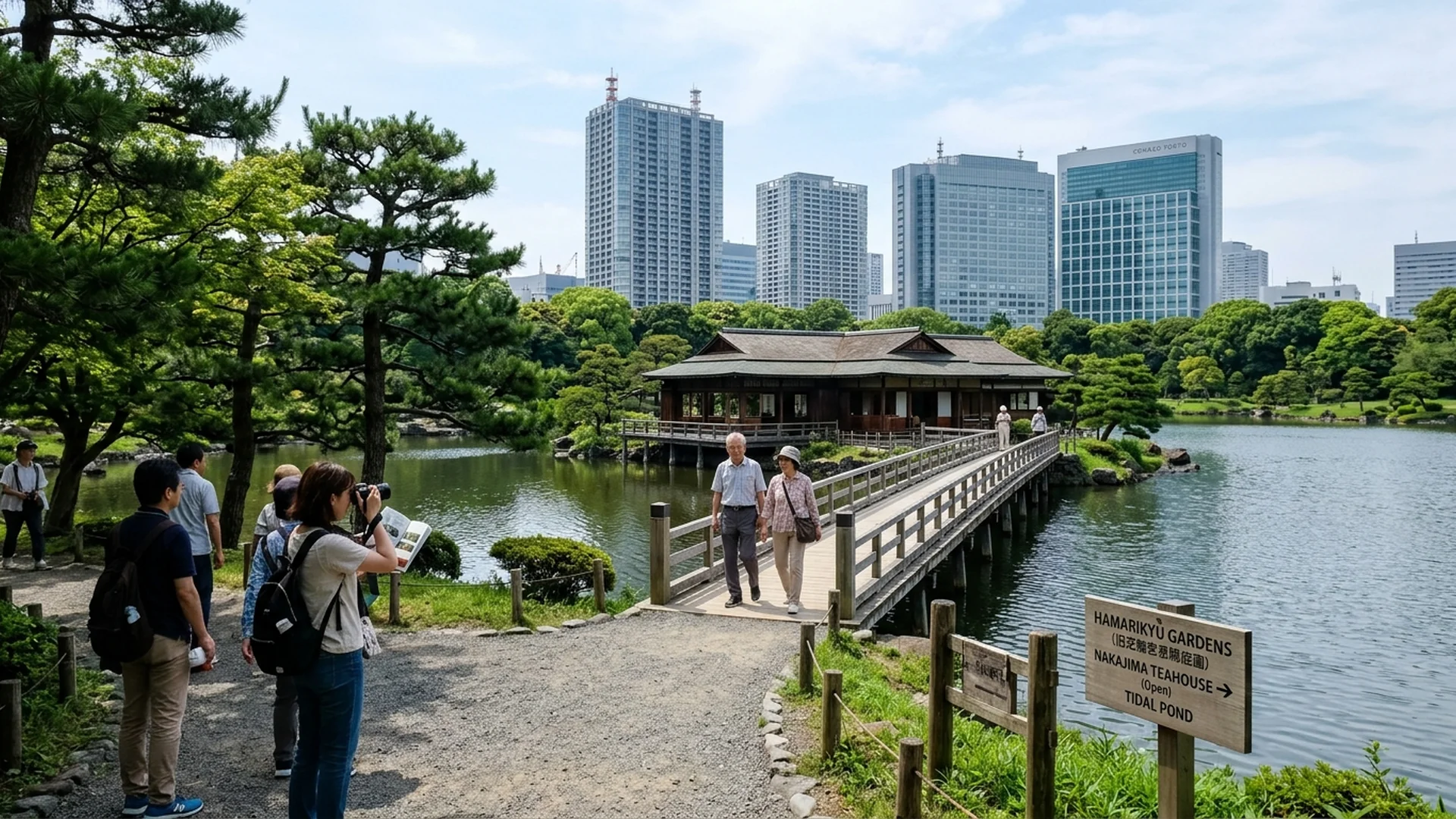
When the relentless skyline of Tokyo is suddenly quieted by the gentle rise and fall of seawater drawn from Tokyo Bay, time itself seems to slow down. Set amidst the bustling financial district, Hamarikyu Gardens stands as an enduring bridge across centuries, preserving the refined aesthetic of the Edo period upon grounds once frequented by Tokugawa shoguns for falconry and leisure. Ancient, centuries-old black pines stretch their gnarled branches in quiet defiance against the gleaming glass facades of the Shiodome skyscrapers. It is one of the world’s most compelling architectural and natural juxtapositions, where the feverish pace of the modern metropolis is held at bay by ancient stone ramparts and tranquil moats.
Daimyo Landscape Architecture and Natural Tidal Ponds
Hamarikyu is far more than a manicured urban green space; it is a masterclass in Chisen-kaiyushiki landscape architecture—the classic strolling garden centered around a grand pond favored by feudal daimyo lords during the Edo period. At the heart of this sanctuary lies Shioiri-no-ike, a saltwater pond linked directly to Tokyo Bay through an ingeniously engineered system of historic sluice gates. The water level and clarity within the pond rise and fall with the natural ocean tide, creating a thriving brackish ecosystem that regularly draws coastal wildlife, including wild ducks and elegant egrets. Crossing the graceful Oyachibashi Bridge toward the central island offers the transcendent sensation of stepping directly inside a classical ink wash painting, beautifully framed by the towering engineering triumphs of the twenty-first century.
The Art of Tea at Nakajima No Chaya
Floating quietly amidst the wind-rippled waters stands Nakajima No Chaya, a deeply revered dark-wood teahouse with roots stretching deep into Japanese history. Here, travelers seeking spiritual clarity are welcomed with bowls of steaming frothy matcha and traditional seasonal wagashi confections meticulously crafted to echo nature’s rhythms. The subtle aroma of fine green tea, paired with the melt-in-the-mouth texture of delicate floral confections, engages every sense in quiet harmony. Sitting in seiza on traditional tatami mats while gazing out through wide-open wooden shutters at reflections of opposing skyscrapers creates an effortless synthesis of timeless Zen tranquility and vibrant urban life.
Shogunate Heritage and Imperial Legacies
Before evolving into a world-class public sanctuary, this prized parcel of real estate served as an exclusive aristocratic playground. It began as a reedy falconry ground for the Matsudaira clan before being comprehensively re-envisioned by the Tokugawa shogunate as a magnificent seaside villa for hosting foreign dignitaries and retreating from affairs of state. Echoes of this storied past remain vividly alive within the substantial granite ramparts, historical foundations, and the magnificent 300-year-old pine tree whose massive, sweeping branches are meticulously supported by wooden props. Having miraculously survived natural calamities and the devastation of the Second World War, this ancient guardian stands as a living testament to the resilience and profound roots of Tokyo’s cultural heritage.