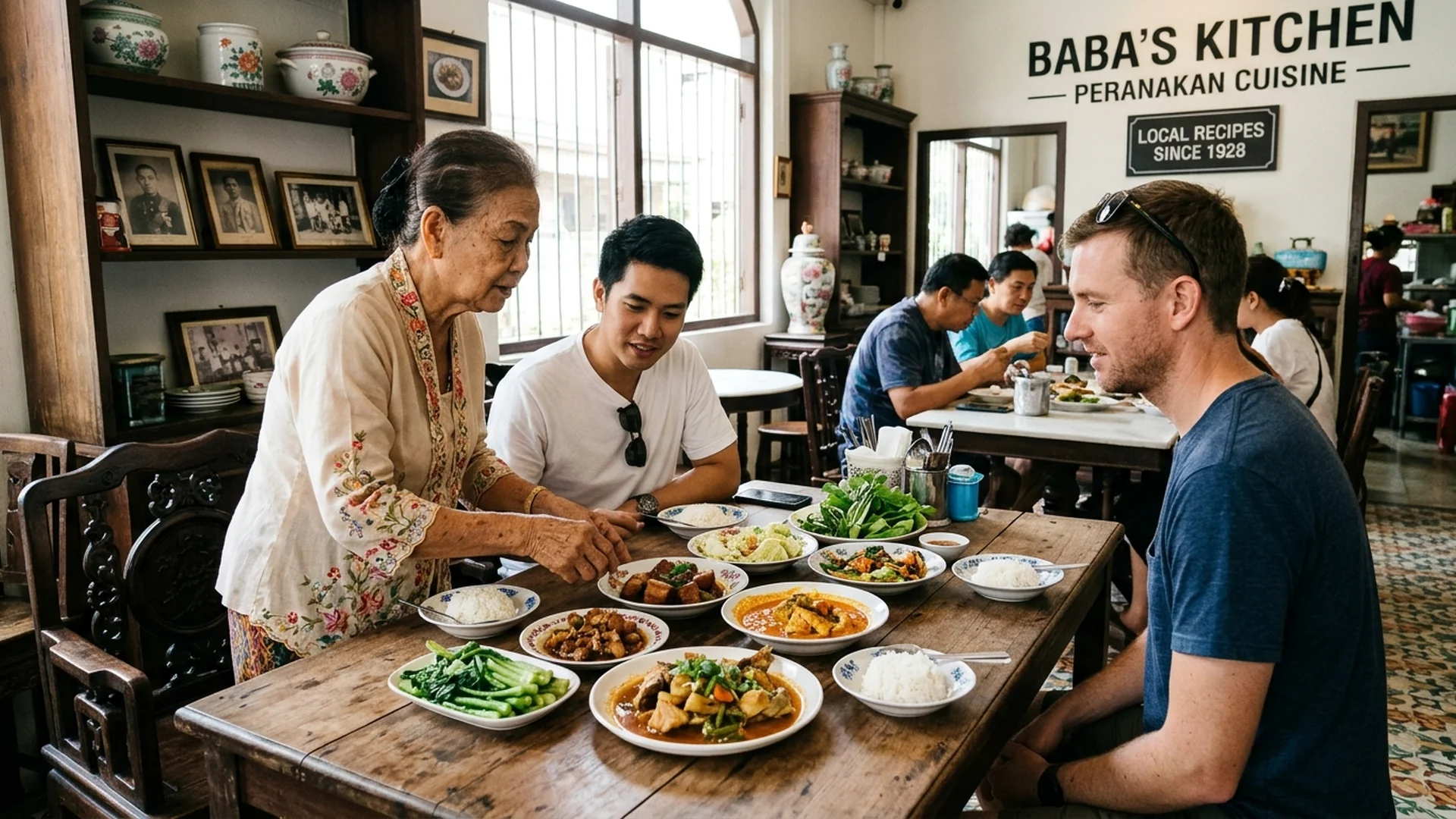
Beneath the ornate architecture of Phuket’s historic Sino-Portuguese quarter, a rich culinary narrative unfolds through wisping stove smoke and fragrant spices. This is the enduring legacy of the Baba-Yonya—the Peranakan pioneers whose lineage bridges Hokkien Chinese tin miners with indigenous communities. Their union forged a distinct gastronomic identity that has earned Phuket recognition as a UNESCO Creative City of Gastronomy.
More than mere sustenance, a Baba feast is an edible historical archive. Every ingredient, from foundational Chinese black soy sauces and intricate braising techniques to the vibrant fire of southern herbs, is harmonized with exquisite precision. Historically overseen by the matriarchs, or ‘Yahya,’ who commanded the ancestral kitchens, this cuisine possesses a rounded, delicate complexity that stands entirely apart from mainstream southern Thai fare.
Roots and Resonance: When Hokkien Meets the South
The migration of Peranakan culinary culture began with the influx of Hokkien Chinese laborers during the tin-mining boom. As these men married local women, their domestic kitchens became laboratories for cultural synthesis. Chinese techniques of braising, stir-frying, and steaming met local chilies, ginger, galangal, lemongrass, and coconut milk. What distinguishes Phuket’s Peranakan palate from those of Penang or Malacca is the distinct inclusion of fiery bird’s eye chilies and aromatic Thai herbs, layered gracefully over the comforting foundations of overseas Chinese cookery.
Pillars of the Plate: Moo Hong, O-Tao, and Loba
No exploration of Baba cuisine is complete without encountering ‘Moo Hong’—pork belly simmered to a melt-in-the-mouth tenderness in a broth of coriander root, garlic, pepper, and dark soy sauce, serving as a universal symbol of celebration and warmth. This pairs harmoniously with ‘O-Tao,’ plump fresh oysters stir-fried with steamed taro, batter, and crispy pork lard over an open charcoal fire until smoky and rich. Another classic is ‘Loba,’ crispy five-spice marinated pork offal served with a sweet-and-sour tamarind dip dusted with crushed peanuts, alongside ‘Kian Tod,’ minced pork wrapped in delicate, crisp bean curd sheets. Each dish speaks to the refined sourcing and practiced culinary mastery of ancestral kitchens.
Subtle Sweets and Infusions: Heritage Confections and Tea
The realm of Baba sweets and beverages is equally captivating. Traditional delicacies such as ‘O-Aew,’ a translucent, refreshing jelly derived from soaked seeds, are served simply with syrup, candied bananas, and shaved ice to temper the palate after spiced dishes. Connoisseurs will also discover ‘Khanom Phrik,’ a heritage pastry spiced with black pepper and fried shallots, alongside ceremonial rice flour confections reserved for weddings and auspicious festivals. Sipping traditional ‘Kopi’ or hot tea alongside these treats amidst ancestral shophouses captures the very essence of Phuketian leisurely living.